Orthopaedic Trauma: Understanding Fractures, Dislocations & Recovery

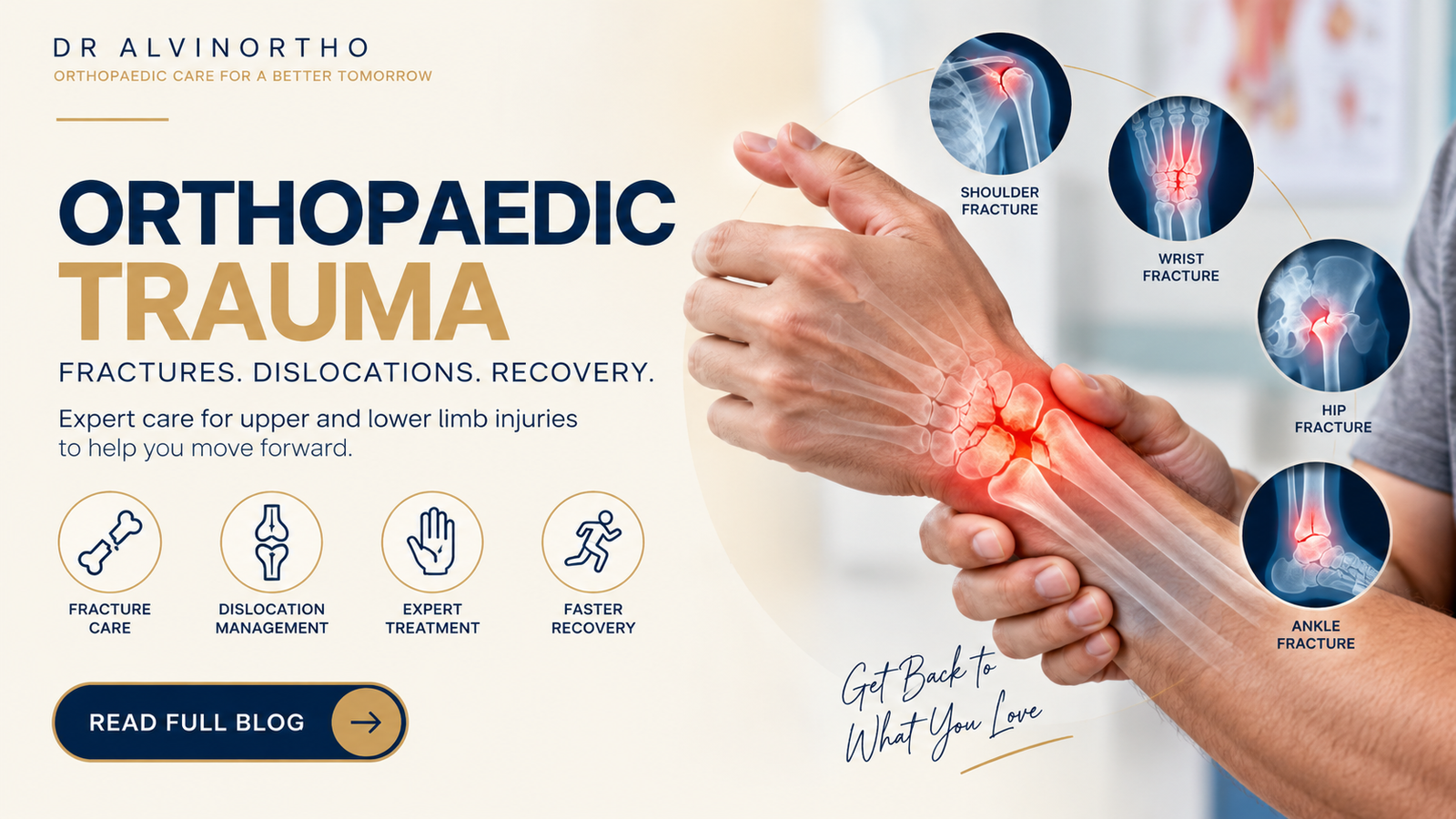
Orthopaedic trauma refers to injuries affecting the bones, joints, muscles, ligaments, and other structures of the musculoskeletal system. These injuries can happen suddenly due to falls, sports injuries, road accidents, or other unexpected incidents.
Fractures and dislocations of the upper and lower limbs are among the most common orthopaedic trauma conditions. While some injuries may be straightforward, others require specialist assessment and treatment to ensure proper healing and restoration of movement.
Common Orthopaedic Trauma Injuries
Orthopaedic trauma can involve different parts of the body, including:
- Wrist fractures
- Scaphoid fractures
- Shoulder fractures
- Elbow injuries
- Hip fractures
- Ankle fractures
- Joint dislocations
- Sports-related injuries
The severity of an injury can vary significantly. Some fractures may be managed without surgery, while complex fractures or unstable injuries may require surgical treatment.
What Are the Symptoms?
Common symptoms following an orthopaedic injury include:
- Sudden pain
- Swelling
- Bruising
- Difficulty moving the affected area
- Reduced strength
- Deformity or abnormal positioning
- Difficulty putting weight on a limb
If a serious injury is suspected, prompt medical evaluation is important.
Diagnosis and Treatment
An orthopaedic specialist may perform a physical examination and recommend imaging such as an X-ray, CT scan, or MRI depending on the suspected injury.
Treatment may include immobilisation, medication, physiotherapy, or surgery depending on the type and severity of the injury.
Recovery After an Injury
Recovery does not end once the fracture or injury has been treated. Rehabilitation can be an important part of returning to normal function.
A structured recovery programme may focus on:
Pain management → Healing → Mobility → Strength → Return to activity
Following medical and rehabilitation advice can help support a safe recovery.
When Should You See an Orthopaedic Specialist?
If you have experienced a significant injury, persistent pain, swelling, restricted movement, or difficulty using the affected limb, an orthopaedic assessment can help determine the appropriate course of treatment.
Dr Alvin Ortho — Orthopaedic Surgeon | Shoulder & Upper Limb Specialist
This article is for general educational purposes and does not replace an individual medical consultation.