
DR. ALVIN
SAJAN
SHOULDER, KNEE & ELBOW SPECIALIST
REVERSE SHOULDER REPLACEMENT
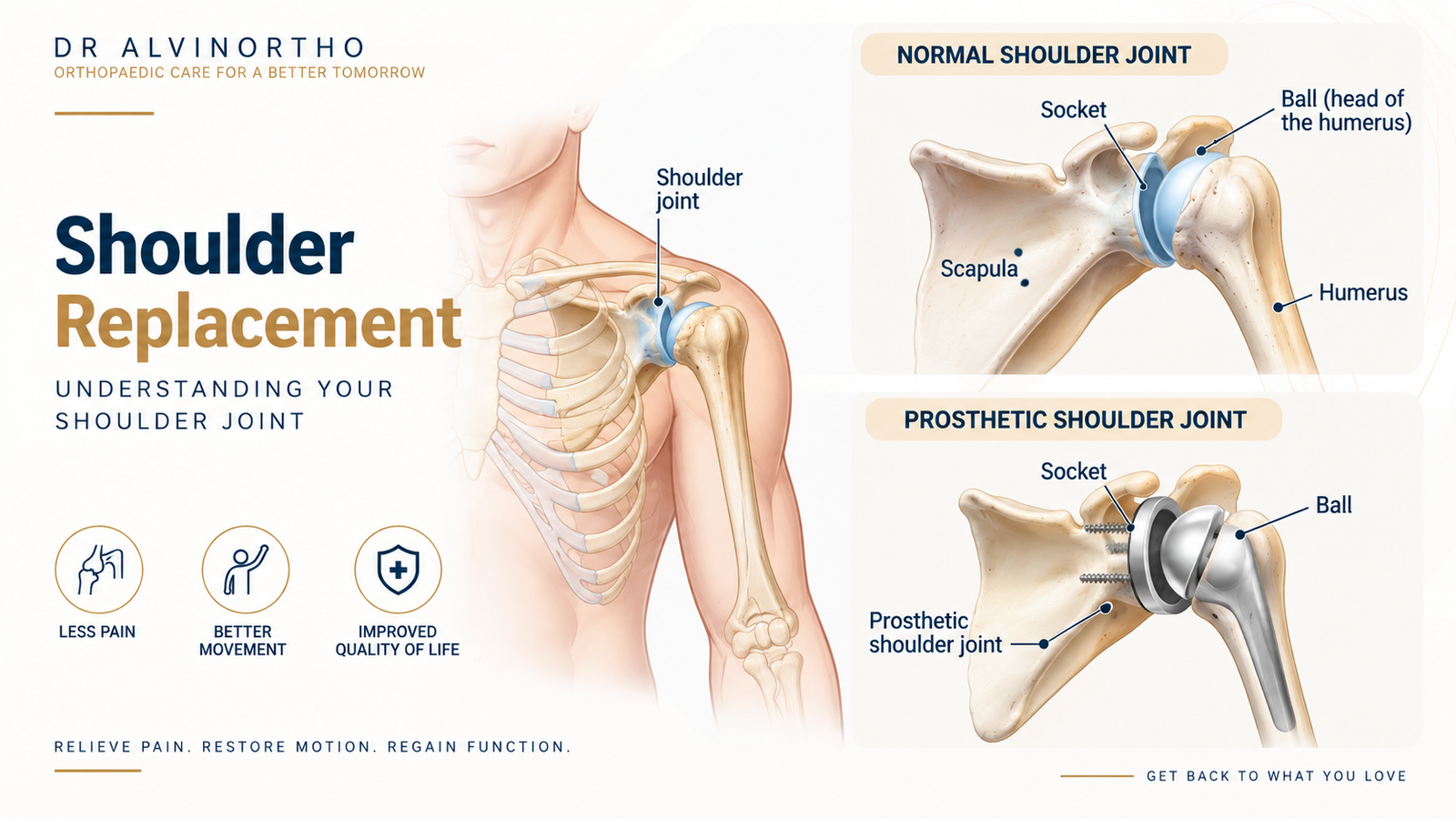
The shoulder is a ball-and-socket joint. In a normal
shoulder, the ball is at the top of the upper arm bone
(humerus) and the socket (glenoid) is part of the
shoulder blade. The rotator cuff tendons hold the ball
in the socket and help lift and rotate the arm.
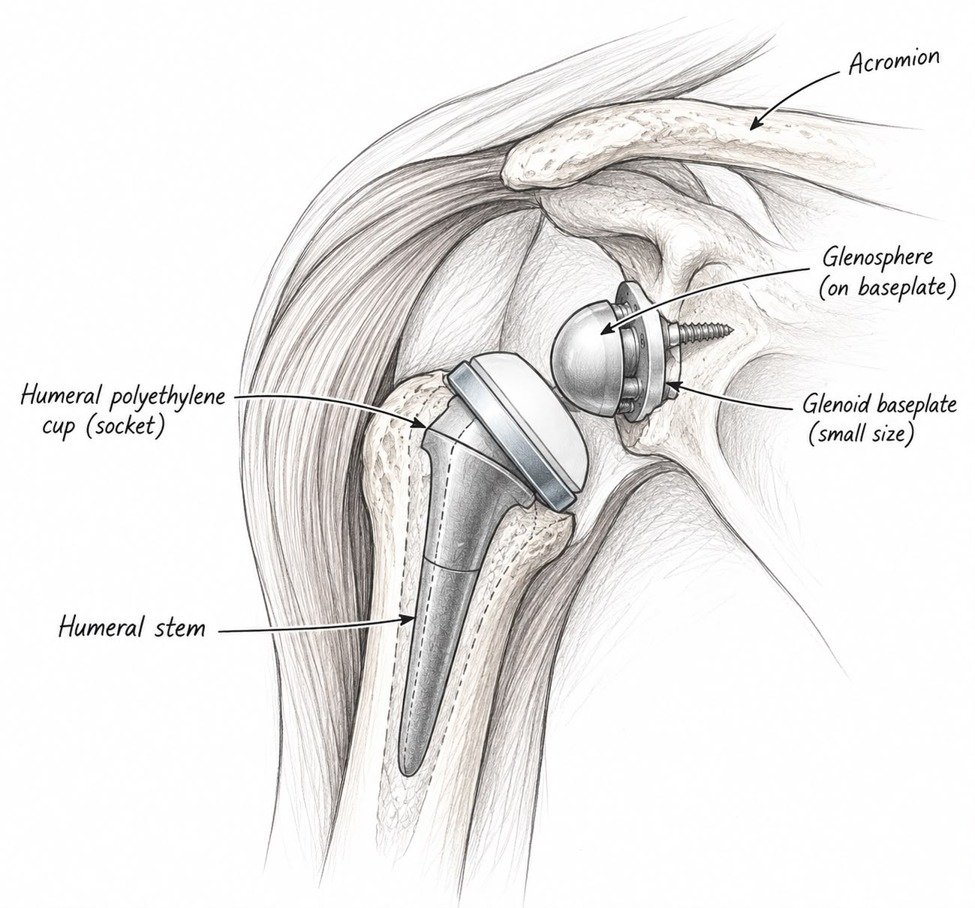
In a reverse shoulder replacement, the positions of the
ball and socket are switched. A metal ball is fixed to
the shoulder blade, and a plastic-lined cup is placed on
the top of the upper arm bone. This design lets the large
deltoid muscle, rather than the damaged rotator cuff,
lift the arm.
Who Needs It
Who needs a reverse shoulder replacement? What conditions can be treated?
- Rotator cuff tear arthropathy: arthritis that develops after a long-standing, large rotator cuff tear
- Massive, irreparable rotator cuff tears with weakness and loss of arm elevation, with or without arthritis
- Shoulder arthritis with a deficient rotator cuff, or arthritis with significant bone wear of the socket
- Complex fractures of the upper arm bone, especially in older patients where the bone is unlikely to heal or the ball cannot be repaired
- Failed previous shoulder surgery, including a failed conventional shoulder replacement or failed rotator cuff repair
- Pseudoparalysis: inability to lift the arm due to cuff failure
- Selected cases of tumour, or fracture healing problems (malunion/nonunion)
Is this the right surgery for me?
Surgery is usually considered when you have significant pain or loss of function that has not improved with non-surgical treatment, and when imaging (X-rays, CT or MRI) shows damage that a replacement can address. Your surgeon will look at your symptoms, examination, scans, age, activity level and overall health before recommending it.
What treatments should I try first?
In most cases, non-surgical care comes first:
- Activity modification and anti-inflammatory or pain medication
- Physiotherapy to improve motion and strengthen the muscles that are still working
- Corticosteroid injections for pain relief in selected patients
Surgery may be recommended when pain disrupts sleep and daily activities, or when you cannot use your arm for basic tasks such as dressing, eating or reaching.
Before Surgery
How do I prepare?
- You will have a pre-operative assessment, which may include blood tests, an ECG and a review of your medical conditions and medications.
- Tell us about all medications and supplements. Blood thinners and some other medicines may need to be paused, and we will tell you exactly when.
- If you smoke, stopping well before surgery lowers the risk of infection and healing problems.
- Dental problems and skin infections should be treated before surgery.
- Plan your recovery at home: you will have one arm in a sling, so arrange help with driving, cooking, dressing and bathing. Prepare a comfortable place to sleep, often semi-upright in a recliner or with pillows.
- You will be told when to stop eating and drinking before surgery.
What type of anaesthesia is used?
The surgery is performed under general anaesthesia, usually combined with a nerve block (an injection around the nerves of the shoulder). The block numbs the arm and greatly helps with pain for the first 12–24 hours. Your anaesthetist will discuss the best option for you.
The Surgery
How is the surgery performed?
- An incision is made at the front of the shoulder (or, in some cases, over the top).
- The damaged surface of the upper arm bone is removed and replaced with a metal stem and a cup lined with plastic.
- The socket is prepared and a metal baseplate with a ball (glenosphere) is fixed to the shoulder blade, usually with screws.
- The components are tested for stability and range of motion, and the incision is closed.
How long does the surgery take?
Typically about [1.5 to 2.5] hours, depending on complexity. Most patients stay in hospital for [1–2] nights, though some centres offer same-day or next-day discharge for selected patients.
Will I need a blood transfusion?
Transfusion is uncommon. Your team will check your blood count beforehand and take steps to limit blood loss.
After Surgery
What can I expect in hospital?
You will wake up with your arm in a sling. Pain is managed with a combination of the nerve block, tablets and, if needed, stronger medication. A physiotherapist will teach you how to move safely, and you will usually be discharged once pain is controlled and you can manage at home.
How long will I wear the sling?
Typically [4–6] weeks, though this varies with your surgeon's protocol. You will usually take it off for gentle exercises and hygiene.
What does recovery look like?
The timeline below is a general guide. Your surgeon and physiotherapist will tailor it to you.
- Weeks 0–6: Sling use. Gentle hand, wrist and elbow movement. Pendulum and passive shoulder exercises as instructed. No lifting, pushing or pulling.
- Weeks 6–12: Sling is weaned off. Active movement begins, and the focus is on regaining motion and using the arm for light daily tasks.
- 3–6 months: Gradual strengthening of the deltoid and surrounding muscles. Most patients notice steady gains in comfort and function.
- 6–12 months: Continued improvement. Many patients keep improving for up to a year.
When can I return to normal activities?
- Driving: usually after about [6 weeks], once you are out of the sling, off strong pain medication and able to control the car safely.
- Desk work: often within [2–4 weeks], depending on your job.
- Heavy manual work or lifting: may take [4–6 months] or longer, and some limits may be permanent.
- Sleeping: many patients sleep semi-upright for several weeks.
Will physiotherapy be needed?
Yes. Rehabilitation is a key part of a good result. Following your exercise programme and attending physiotherapy is as important as the surgery itself.
Results and Expectations
How successful is reverse shoulder replacement?
Most patients experience significant pain relief and improved ability to use their arm for daily activities such as eating, grooming and reaching to shoulder height or above. Outcomes depend on the diagnosis, your general health and how closely you follow rehabilitation. [Add your own outcomes data or published references here.]
Will my shoulder feel normal?
The goal is a comfortable, functional shoulder. It will not be identical to a natural shoulder. Rotation, especially behind the back, may remain limited, and you may notice some clicking or a different feel to the joint.
How long will the implant last?
Modern reverse shoulder implants are durable, and many last [10–15 years or longer]. Longevity depends on your age, activity level and bone quality. Younger or more active patients may outlive their implant and need revision surgery in the future.
Are there activity restrictions in the long term?
Low-impact activities such as walking, swimming, golf (modified) and gardening are generally encouraged. Heavy lifting, repetitive overhead work and contact sports are usually discouraged. Your surgeon will advise you based on your situation.
Risks and Complications
What are the risks of surgery?
As with any major surgery, complications are uncommon but possible. They include:
- Infection (superficial or deep)
- Dislocation of the joint
- Fracture of the bone around the implant
- Nerve injury (usually temporary)
- Blood clots (DVT or pulmonary embolism)
- Loosening or wear of the implant over time
- Scapular notching (wear of the shoulder blade bone beside the ball)
- Stiffness or incomplete pain relief
- Anaesthetic risks and medical complications such as heart or lung problems
- Possible need for further surgery
Your surgeon will go through these with you and explain how they apply to your health.
What can I do to lower my risk?
- Follow pre-operative instructions about medications, smoking and skin care
- Keep your wound clean and dry
- Follow your rehabilitation protocol and sling instructions
- Tell your surgeon early about any redness, discharge or fever
- Tell your dentist and doctors about your implant before future procedures
When to Call Your Doctor
Contact us promptly or seek urgent care if you have:
- Fever or chills
- Increasing redness, swelling or drainage from the wound
- Severe or worsening pain not relieved by medication
- Sudden loss of arm movement or a feeling that the shoulder has "popped out"
- Calf pain or swelling, chest pain, or shortness of breath (go to emergency immediately)
- Numbness or colour changes in the hand
Common Questions
Why is it called "reverse"?
Because the ball-and-socket arrangement is reversed compared to a natural shoulder. This changes the mechanics so the deltoid can lift the arm when the rotator cuff cannot.
Do I need a working rotator cuff for this surgery?
No. That is the main advantage of a reverse replacement. It works even when the rotator cuff is torn or non-functional.
Am I too old for this surgery?
There is no strict age limit. Decisions are based on your overall health and goals rather than age alone.
Am I too young for this surgery?
Reverse replacement is generally reserved for older patients, though it may be used in younger patients with specific problems. Your surgeon will discuss alternatives and long-term implications.
Can both shoulders be replaced?
Yes, but surgeries are usually staged months apart to allow recovery of the first side.
Will it set off airport metal detectors?
Possibly. Most patients carry an implant card or a letter from the surgeon.
This information is for general education and does not replace advice from your surgeon. Every patient is different. Please discuss your own situation with Dr Alvinortho before making any decision about surgery.
Arthroscopic Rotator Cuff Repair
What is a rotator cuff tear?
The rotator cuff is a group of four muscles and tendons that surround the shoulder joint. They hold the ball in the socket and help you lift and rotate your arm. A tear happens when one of the tendons pulls away from the bone, either suddenly after an injury or gradually from wear over time.
What are the symptoms?
- Pain in the shoulder, often worse at night or when lying on the affected side
- Weakness when lifting or rotating the arm
- Difficulty with overhead tasks, dressing or reaching behind the back
- Sometimes a catching or clicking feeling
What is an arthroscopic rotator cuff repair?
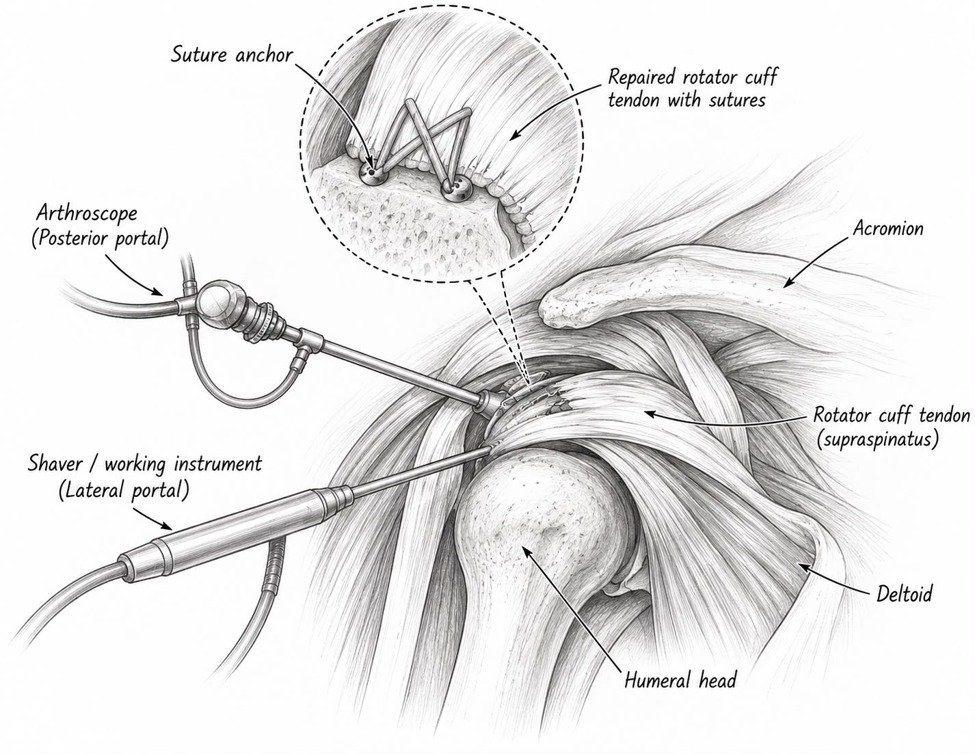
Arthroscopic repair is a keyhole operation. A small camera and instruments are placed through a few small cuts (about 1 cm) around the shoulder. The torn tendon is brought back to its original site on the bone and secured with small anchors and strong sutures.
Why arthroscopic and not open surgery?
Smaller incisions, less muscle damage, a clear view of the whole joint, and often less early pain and quicker early recovery. Healing and long-term results are comparable to open repair.
Am I a candidate?
When is surgery recommended?
- A recent traumatic tear, especially in a younger or active patient
- A tear causing persistent pain or weakness despite non-surgical treatment
- A tear that is getting larger on follow-up imaging
When might non-surgical treatment be enough?
Many small, partial or long-standing tears do well with physiotherapy, anti-inflammatory medication and injections. Surgery is not always urgent, but waiting too long with a large tear can make it harder to repair.
When might repair not be possible?
Very large, retracted tears with fatty degeneration of the muscle may not be repairable. In these cases, other options include debridement, tendon transfer, a superior capsular reconstruction or a reverse shoulder replacement. [Edit to match your practice.]
The surgery
What happens?
Under general anaesthesia with a nerve block, the surgeon examines the joint, treats any other problems (such as inflamed tissue or the biceps tendon), prepares the bone, and repairs the tendon with anchors and sutures. Surgery takes about [1–2 hours] and is usually done as a day case.
Recovery
What should I expect?
Protecting the repair while it heals is the most important part of recovery.
- Weeks 0–6: Sling worn, with gentle passive movement guided by your physiotherapist. No lifting or active use of the arm.
- Weeks 6–12: Sling is weaned and active movement begins.
- 3–6 months: Gradual strengthening.
- 6–12 months: Return to full activity and sport. Strength can continue to improve for a year.
When can I drive or return to work?
Driving is usually possible after [6 weeks]. Desk work can often resume within [2–4 weeks]. Heavy or overhead work may take [4–6 months].
How successful is the surgery?
Most patients have good pain relief and improved function. Healing rates depend on the size and quality of the tear, your age, smoking and diabetes. Larger tears have a higher chance of the tendon not healing completely, though many such patients still feel much better. [Add your own outcome data.]
Risks
Uncommon but possible: stiffness, re-tear of the tendon, infection, nerve or blood vessel injury, anaesthetic risks, blood clots, and persistent pain.
How can I lower my risk?
Stop smoking, follow sling and exercise instructions closely, and attend all physiotherapy and follow-up visits.
When should I call my doctor?
Fever, spreading redness or wound drainage, worsening pain, or numbness in the hand. Calf pain, chest pain or shortness of breath needs emergency care.
Orthopaedic Trauma
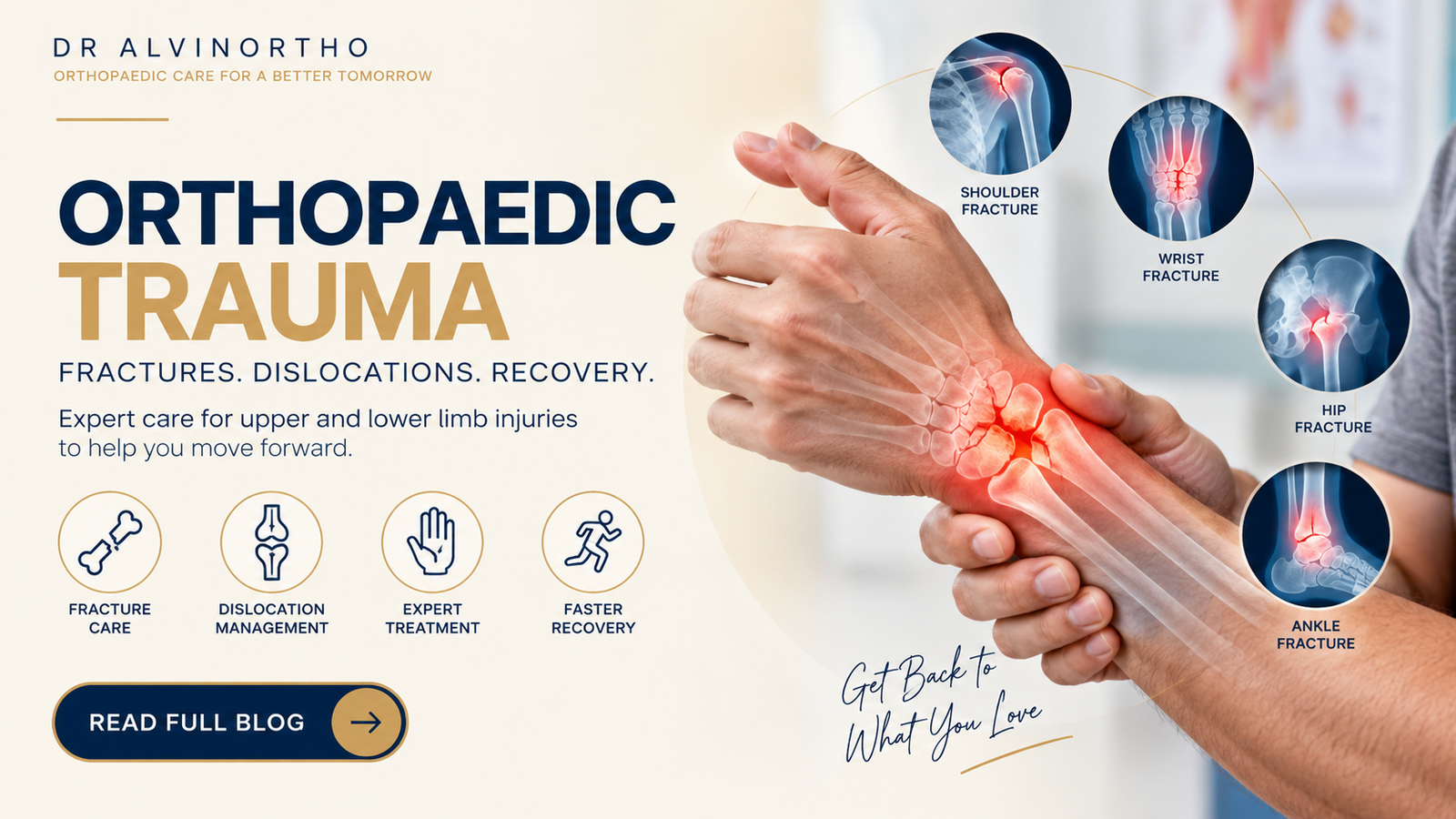
Dr Raymond Yu manages all general orthopaedic trauma including fractures and dislocations of the upper and lower limbs. Common traumatic injuries requiring orthopaedic specialist care include wrist fractures, scaphoid fractures, shoulder fractures, hip fractures and ankle fractures.
These injuries are unexpected and can be overwhelming for patients and their families. Dr Yu and his expert team will guide you through the rehabilitation and recovery.
Shoulder Dislocation
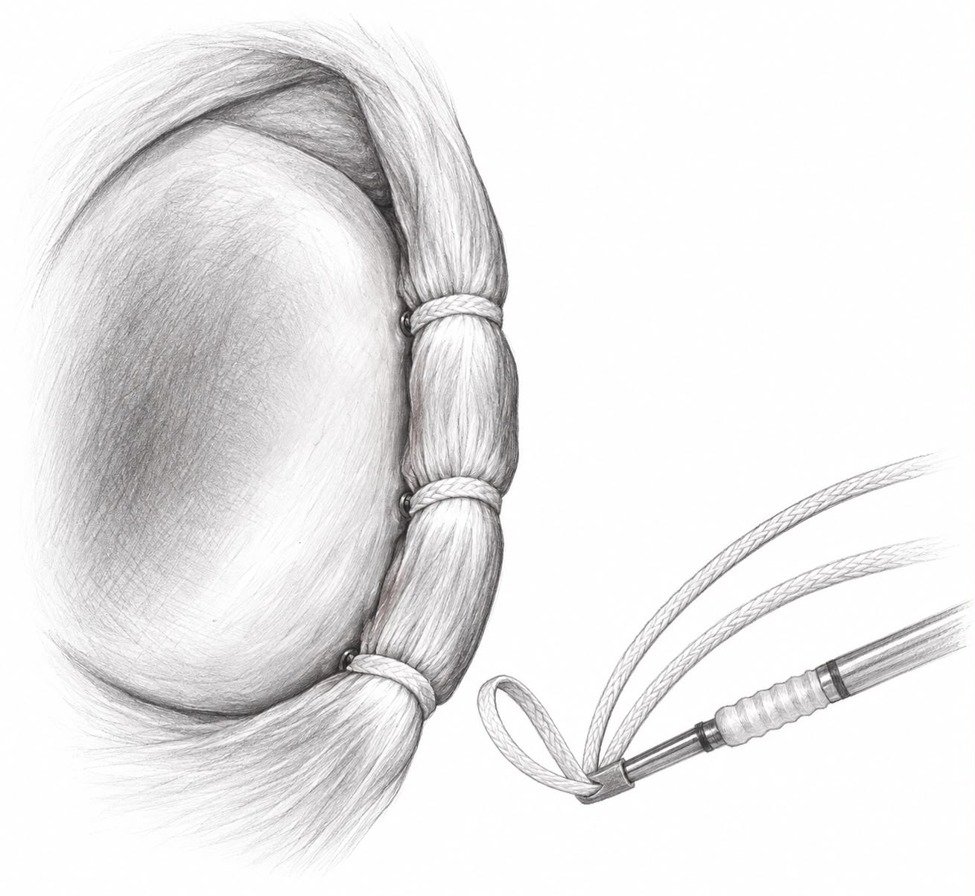
A) Arthroscopic Bankart Repair
What is a Bankart lesion?
The shoulder is a ball-and-socket joint with a shallow socket. A rim of tough cartilage called the labrum deepens the socket and anchors the ligaments that keep the ball in place. When the shoulder dislocates, the labrum is often torn away from the front-bottom of the socket. This tear is called a Bankart lesion, and it is the main reason shoulders keep dislocating.
What are the symptoms?
- Repeated dislocations or the feeling that the shoulder is about to slip out (apprehension)
- Pain or a catching sensation with overhead or throwing movements
- A shoulder that feels loose or unstable
- Weakness, especially after a dislocation
What is an arthroscopic Bankart repair?
It is a keyhole operation. A small camera and instruments are inserted through a few small cuts around the shoulder. The torn labrum is reattached to the rim of the socket using small anchors and strong sutures. This restores the bumper that keeps the ball centred and tightens the stretched capsule.
Why arthroscopic?
Smaller scars, less muscle disruption, a full view of the joint (so other injuries can be treated), and typically less early pain and stiffness than open surgery.
Am I a candidate?
When is surgery recommended?
- Recurrent dislocations or subluxations
- A first dislocation in a young, active or contact-sport athlete, where the risk of repeat dislocation is high
- Instability that limits sport, work or daily activities despite physiotherapy
When might another operation be better?
If there is significant bone loss from the socket or the ball (shown on CT or MRI), a soft-tissue repair alone has a higher chance of failing. In these cases, a bone procedure such as a Latarjet is often recommended. The same may apply to patients with very high-demand contact sports or a failed previous repair.
Can I avoid surgery?
After a first dislocation, some patients, particularly older ones or those with low demands, do well with a short period of rest followed by physiotherapy to strengthen the muscles that stabilise the shoulder. Younger athletes are more likely to dislocate again without surgery.
The surgery
What happens?
Under general anaesthesia with a nerve block, the surgeon inspects the whole joint, prepares the socket edge, and secures the labrum back to the bone with 3–5 anchors. Additional steps (such as a capsular tightening or a remplissage for a dent in the ball) may be added depending on your anatomy. Surgery takes about 1–1.5 hours and is usually a day case.
Recovery
What should I expect?
The repair needs time to heal securely before it can be stressed.
- Weeks 0–4/6: Sling worn. Gentle movement of the hand, wrist and elbow, with limited shoulder motion as directed.
- Weeks 6–12: Sling is weaned. Range of motion is restored and early strengthening begins.
- 3–6 months: Progressive strengthening and sport-specific training.
- About 6 months: Return to sport is typical, with contact and collision sports often delayed until 6–9 months or when strength and stability testing are satisfactory.
When can I drive or return to work?
Driving is usually possible after 4–6 weeks. Desk work may resume within 1–2 weeks. Heavy or overhead work often takes 3–4 months or longer.
How successful is the surgery?
Most patients regain a stable shoulder and return to their activities. Recurrence rates are higher in young contact athletes and in patients with bone loss or loose joints, which is why choosing the right operation matters.
Risks
Uncommon but possible: recurrent dislocation or instability, stiffness (especially loss of outward rotation), infection, nerve or blood vessel injury, anchor-related problems, anaesthetic risks, blood clots, and later arthritis in a shoulder that has dislocated repeatedly.
How can I lower my risk?
Follow the sling and exercise plan, avoid risky positions and contact until cleared, and keep to your physiotherapy and follow-up schedule.
When should I call my doctor?
Fever, spreading redness or wound drainage, worsening pain, a sensation of the shoulder slipping out, or numbness in the hand. Calf pain, chest pain or shortness of breath needs emergency care.
B) Latarjet Procedure (Bony Surgery)
The Latarjet procedure is a surgical stabilisation technique used to treat recurrent anterior shoulder dislocations, especially in patients with significant glenoid bone loss or failed previous stabilisation surgery. It involves transferring the coracoid process to the front of the glenoid, providing additional bony support and a dynamic sling effect to improve shoulder stability and reduce the risk of recurrent dislocation.
HAND AND WRIST SURGERY
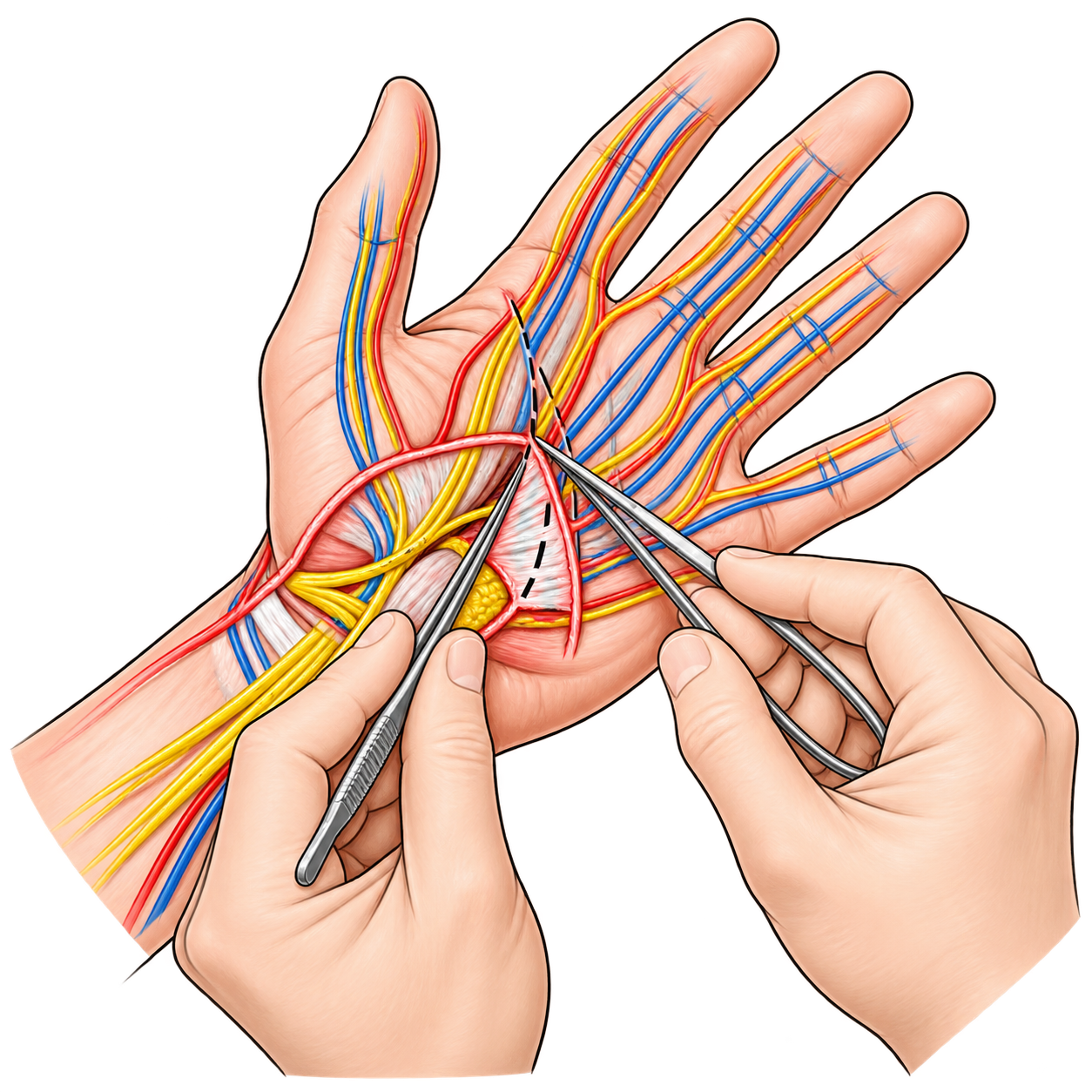
The hand is a complex and delicate mechanism
composed of many interlinked muscles, tendons,
nerves and bones. It is essential for so many
simple daily tasks and injury or disease of the
hand can be life changing.
Dr Raymond Yu treats both chronic and emergency
conditions of the hand and wrist. Chronic
conditions include nerve compression (Carpal
Tunnel Syndrome), trigger finger, Dupuytren's
contracture and arthritis. Emergency conditions
include fractures, tendon rupture and
lacerations.
My goals as a surgeon are to relieve your pain, restore your function, and return you back to doing what you love.
About Dr. Alvin Sajan
Expert Orthopedic & Trauma Care Excellence
Dr. Alvin Sajan, MBBS, MS Orthopaedics, and Fellow in Shoulder and Knee Arthroscopy and Arthroplasty, is a highly respected Consultant Orthopedic Surgeon known for delivering advanced, evidence-based musculoskeletal care. With a strong foundation in trauma surgery, he expertly manages complex fracture cases, orthopedic emergencies, and polytrauma patients with precision and urgency. His approach combines clinical excellence, ethical medical practice, and compassionate patient care, ensuring optimal outcomes even in high-risk injury scenarios. Trained in modern trauma protocols and having completed the AO Basic Trauma Course, Dr. Sajan is recognized for his meticulous surgical planning and commitment to restoring mobility, stability, and quality of life for patients across all age groups.
Special Interests
- Shoulder arthroscopy
- Knee arthroscopy
- Shoulder & knee arthroplasty (joint replacement)
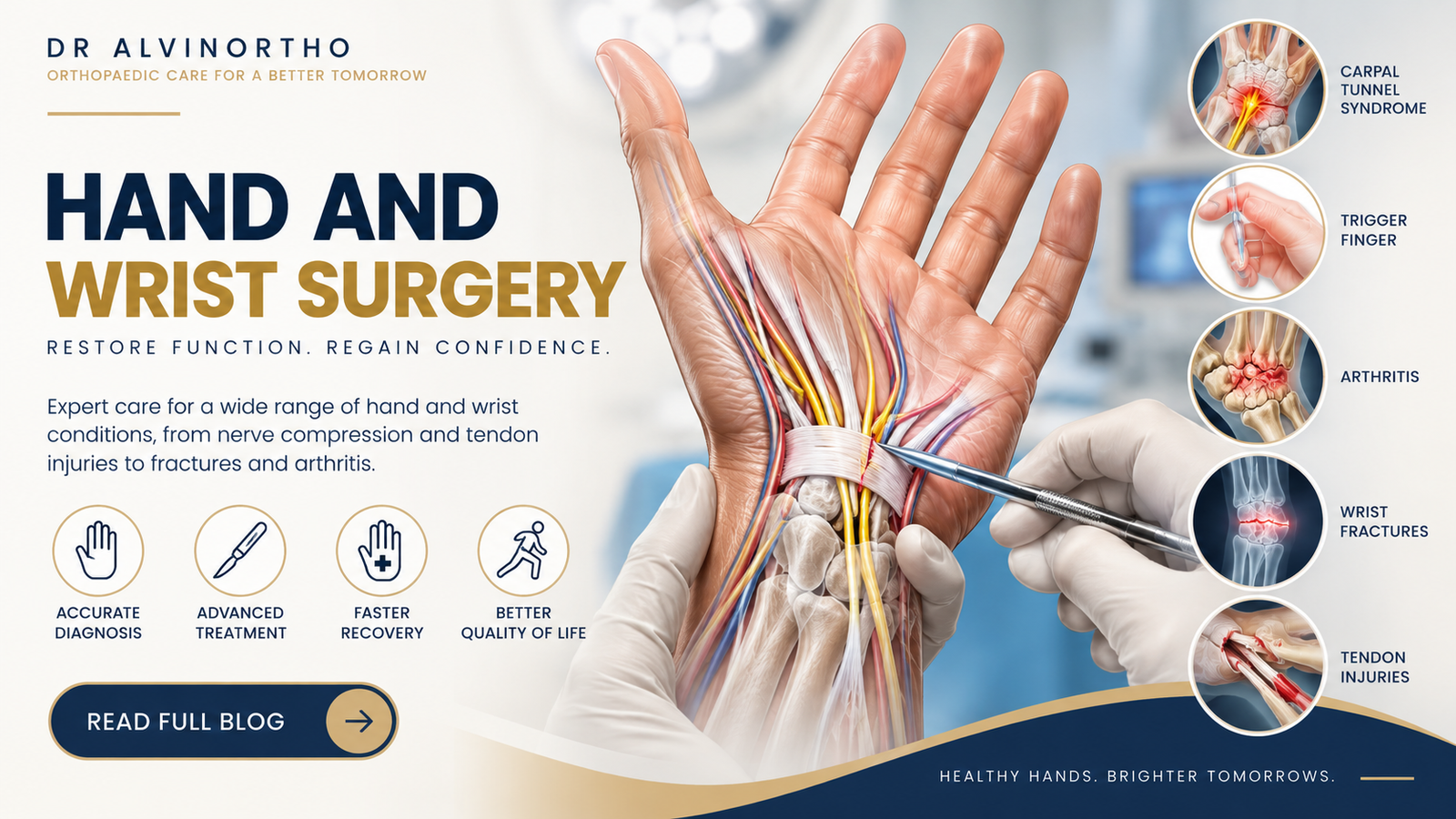
Hand & Wrist Surgery: Conditions, Treatment & Recovery

Orthopaedic Trauma: Understanding Fractures, Dislocations & Recovery
Shoulder Replacement: Types, Benefits & Recovery
Shoulder Pain: Causes, Symptoms & Treatment Options
Dr. Alvin Sajan Practices at


