Shoulder Replacement: Types, Benefits & Recovery

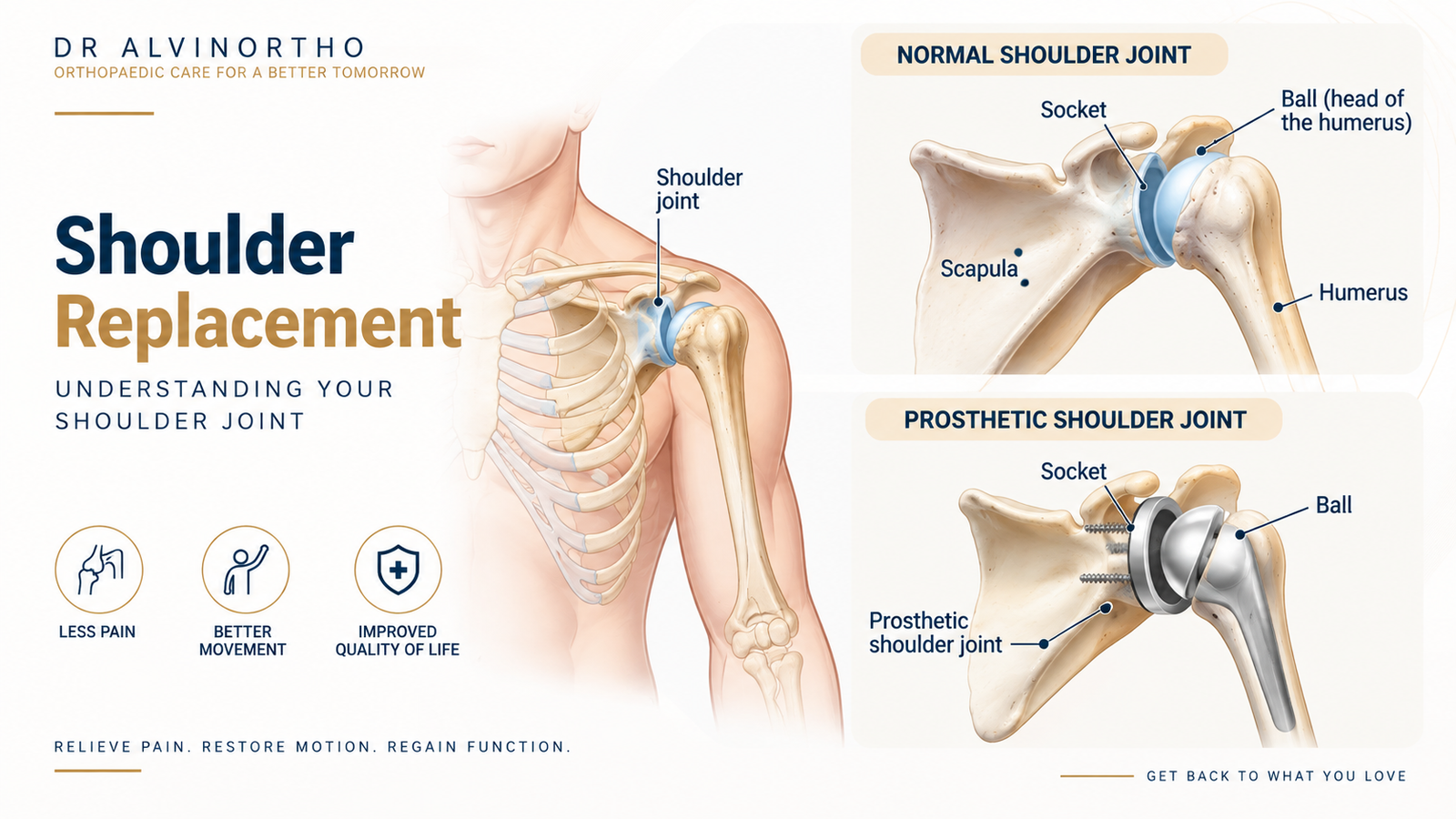
Shoulder replacement, also known as shoulder arthroplasty, is a surgical procedure used to replace damaged parts of the shoulder joint with an artificial implant. It may be recommended when severe pain and loss of shoulder function significantly affect daily activities.
The shoulder is a complex joint that allows a wide range of movement. Conditions such as advanced arthritis, severe fractures, or significant joint damage can make normal shoulder movement painful and difficult.
What Is Shoulder Replacement?
A shoulder replacement involves replacing damaged surfaces of the shoulder joint with prosthetic components.
Depending on the condition of the shoulder, the surgeon may recommend different types of replacement procedures.
Total Shoulder Replacement
In a total shoulder replacement, both major surfaces of the shoulder joint are replaced:
- The damaged ball at the top of the upper-arm bone
- The damaged socket of the shoulder blade
This type of replacement aims to reduce pain and improve shoulder movement and function.
Reverse Shoulder Replacement
A reverse shoulder replacement changes the normal arrangement of the shoulder joint. The ball and socket positions are reversed.
This approach may be considered in certain patients with rotator cuff damage, particularly when the normal shoulder mechanics cannot function effectively.
Why Might Shoulder Replacement Be Needed?
Shoulder replacement may be considered when shoulder damage causes persistent symptoms that significantly interfere with everyday life.
Common reasons can include:
- Severe shoulder arthritis
- Advanced joint degeneration
- Complex shoulder fractures
- Significant cartilage damage
- Certain rotator cuff-related conditions
- Persistent pain and restricted movement
The appropriate treatment depends on the individual’s condition and the results of a clinical assessment and imaging.
Symptoms That May Indicate a Shoulder Problem
You may want to consult an orthopaedic specialist if you experience:
- Persistent shoulder pain
- Difficulty raising your arm
- Shoulder stiffness
- Reduced strength
- Pain while sleeping
- Difficulty performing everyday activities
- Shoulder pain that does not improve with conservative treatment
What Happens After Shoulder Replacement?
Recovery varies from person to person. Rehabilitation and physiotherapy are important parts of recovery after shoulder replacement.
Your rehabilitation programme may focus on gradually improving:
Pain control → Range of motion → Strength → Function
Patients are generally advised to follow their surgeon’s instructions regarding exercises, activity levels, wound care, and return to normal activities.
Benefits of Shoulder Replacement
For appropriately selected patients, shoulder replacement can help:
- Reduce chronic shoulder pain
- Improve shoulder movement
- Improve strength and function
- Make everyday activities easier
- Improve overall quality of life
However, the expected outcome depends on factors such as the underlying condition, type of surgery, overall health, and rehabilitation.
When Should You See an Orthopaedic Specialist?
If shoulder pain or stiffness is affecting your sleep, work, sports, or daily activities, it is important to get the condition properly assessed.
An orthopaedic specialist can evaluate your symptoms, perform a physical examination, and recommend appropriate investigations such as X-rays or other imaging when necessary.
Dr Alvin Ortho
Orthopaedic Surgeon | Shoulder & Upper Limb Specialist
Relieve Pain. Restore Motion. Regain Function.