
Hand & Wrist Surgery: Conditions, Treatment & Recovery

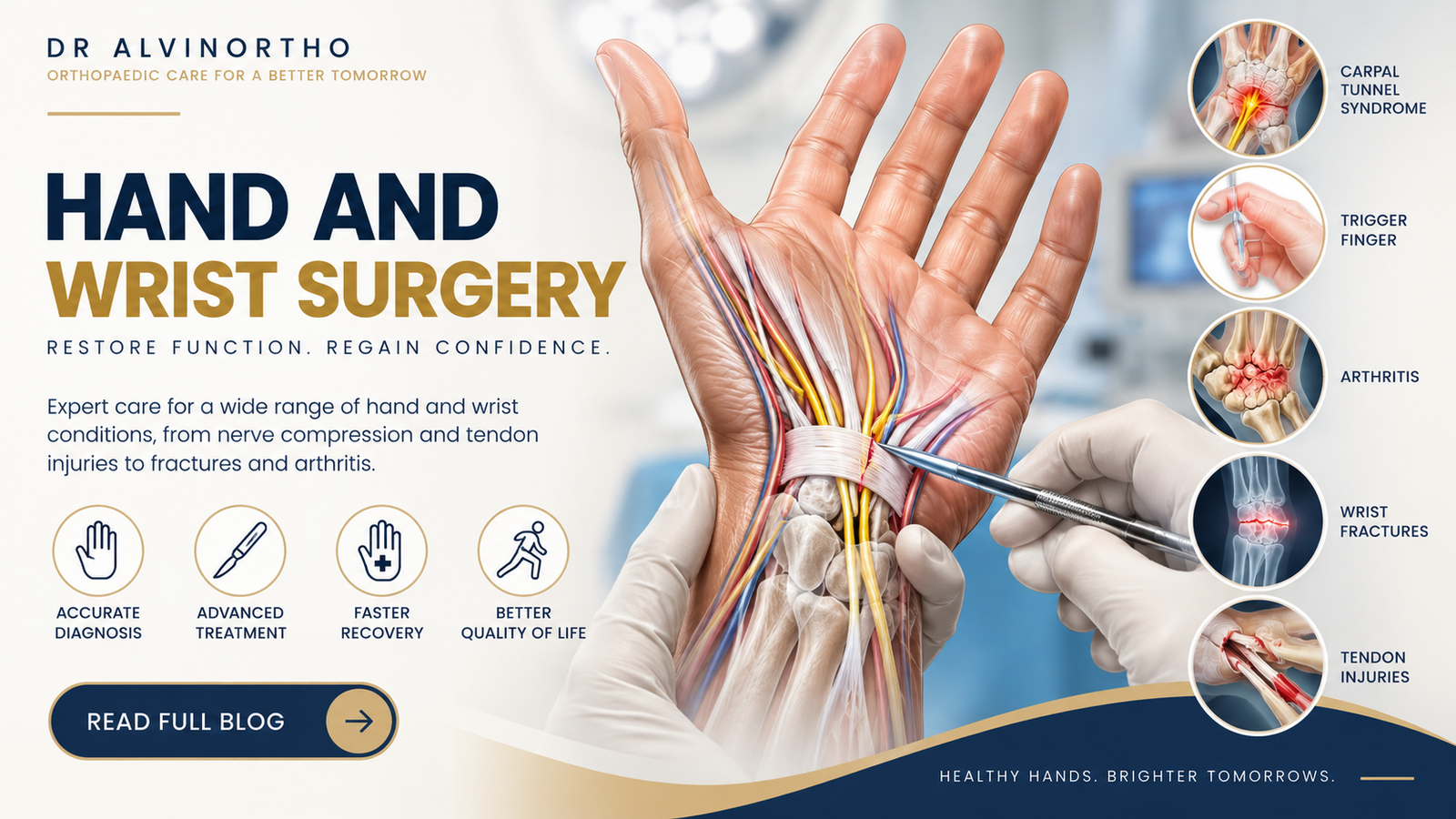
The hand and wrist are complex structures made up of bones, joints, muscles, tendons, nerves, and blood vessels. They allow us to perform countless everyday activities, from writing and typing to lifting objects and playing sports.
Because of their complexity, even a small injury or underlying condition can affect hand movement, strength, sensation, and overall quality of life.
Common Hand & Wrist Conditions
Hand and wrist problems can develop gradually or occur suddenly following an injury. Some common conditions include:
- Carpal Tunnel Syndrome
- Trigger Finger
- Dupuytren’s Contracture
- Hand and Wrist Arthritis
- Wrist Fractures
- Tendon Injuries
- Tendon Ruptures
- Ligament Injuries
- Cuts and Lacerations
- Nerve Compression or Injury
Carpal Tunnel Syndrome
Carpal Tunnel Syndrome occurs when the median nerve becomes compressed as it passes through the wrist.
Patients may experience:
- Numbness or tingling in the hand
- Pain in the wrist or hand
- Weakness when gripping objects
- Symptoms that become worse at night
- Difficulty with fine hand movements
Treatment depends on the severity of symptoms and may include non-surgical management or surgery when appropriate.
Trigger Finger
Trigger finger can cause pain, stiffness, or a catching sensation when moving a finger. In some cases, the affected finger may become temporarily stuck in a bent position.
Early assessment can help determine the most appropriate treatment.
Hand & Wrist Injuries
Accidents, falls, sports activities, and workplace injuries can result in fractures, tendon injuries, or lacerations.
A significant injury may require prompt assessment to determine whether there is damage to the bones, tendons, nerves, or other structures.
When Might Surgery Be Recommended?
Not every hand or wrist condition requires surgery. Depending on the diagnosis, symptoms may initially be managed with conservative treatment.
Surgery may be considered when:
- Symptoms persist despite appropriate non-surgical treatment
- There is significant structural damage
- A fracture requires stabilisation
- A tendon or nerve has been seriously injured
- There is severe nerve compression
- The condition significantly affects daily activities
The treatment approach should always be based on an individual assessment.
What to Expect During Recovery
Recovery depends on the type of condition and treatment performed. Rehabilitation may be an important part of the recovery process.
Depending on the procedure, recovery may focus on:
Pain Control → Wound Healing → Movement → Strength → Return to Daily Activities
Following your surgeon’s instructions and completing recommended rehabilitation can help support recovery.
When Should You See a Specialist?
You should consider an orthopaedic assessment if you have persistent hand or wrist pain, numbness, weakness, restricted movement, or symptoms following an injury.
Early evaluation can help identify the underlying problem and determine the appropriate treatment plan.
Dr Alvin Ortho
Orthopaedic Surgeon | Shoulder & Upper Limb Specialist
Relieve Pain. Restore Motion. Regain Function.